✓ Most art schools require 10-20 pieces in a portfolio.
✓ Digital submission is now the standard for most institutions.
✓ Quality over quantity is crucial for a strong portfolio.
✓ Demonstrating process and concept is as important as finished pieces.
How It Works
1
Research Each Institution's Specifics
Every art school, university, or gallery has unique art portfolio submission requirements. Thoroughly investigate their guidelines regarding number of pieces, media accepted, file formats, and submission platforms.
2
Curate Your Strongest Works
Select a cohesive collection of your best and most representative artworks. Focus on pieces that showcase your technical skills, conceptual understanding, and unique artistic voice, aligning with the program's focus.
3
Document and Format Professionally
High-quality photography or scanning of your artwork is paramount. Ensure proper lighting, cropping, and color accuracy. Adhere strictly to specified file types, resolutions, and naming conventions for digital submissions.
4
Write Compelling Descriptions and Statements
Accompany each artwork with clear, concise titles, dimensions, media, and dates. Craft an artist statement that articulates your artistic philosophy, influences, and the themes explored in your portfolio, providing crucial context.
Understanding the Core Art Portfolio Submission Requirements
Photo: Tima Miroshnichenko / Pexels
Navigating the landscape of art portfolio submission requirements can feel daunting, but at its heart, the process is about presenting your artistic voice in the best possible light. Before even thinking about which pieces to include, the foundational step is meticulous research. Each institution, whether it's a prestigious art school, a competitive university program, or a gallery seeking new talent, will have its own distinct set of guidelines. These are not mere suggestions; they are non-negotiable rules that, if ignored, can lead to immediate disqualification.
Typically, you'll encounter requirements regarding the number of pieces. This often ranges from 10 to 20 works, though some may ask for fewer, and highly specialized programs might request more. The key here is not to just meet the number, but to exceed expectations with quality. A portfolio with 10 stellar pieces is always preferable to one with 20 mediocre ones.
Another critical aspect is the format. In today's digital age, the vast majority of submissions are made online, often through platforms like SlideRoom or Acceptd. This means understanding specific file types (JPEG, PNG, PDF for images; MP4, MOV for video; MP3 for audio), resolution standards (e.g., 72 dpi for web, but higher for print if requested), and even file naming conventions. Submitting a TIFF when a JPEG is required, or a video that's too large, can create technical hurdles that reflect poorly on your attention to detail.
Beyond the technical specifications, institutions are deeply interested in the content itself. They want to see a breadth of skills, a consistent artistic vision, and evidence of your creative process. This often translates into requests for a variety of media, demonstrating your versatility. If you primarily work in painting, can you also show some drawing, sculpture, or digital art? This isn't about being a master of all trades, but about showing exploration and a willingness to learn and experiment. Some programs might specifically ask for observational drawings, life drawings, or works from direct experience, as these are fundamental to developing visual literacy.
Finally, don't underestimate the importance of supplementary materials. These often include an artist statement, a resume or CV, and sometimes even a list of works. The artist statement is your opportunity to articulate your artistic philosophy, influences, and the conceptual underpinnings of your work. It's a chance to provide context that the visuals alone might not convey. A well-crafted statement can elevate a good portfolio to a great one. For more insights on crafting your narrative, explore our guide on building a compelling artist statement. Understanding these core requirements is the first, most crucial step towards a successful submission. Ignoring them is a surefire way to have your hard work overlooked, regardless of its artistic merit.
Crafting a Cohesive and Impactful Digital Art Portfolio
Photo: Kawê Rodrigues / Pexels
The shift to digital platforms has profoundly impacted art portfolio submission requirements, making the presentation of your work as crucial as the work itself. A digital portfolio isn't just a collection of images; it's a curated online experience designed to impress and inform. The first rule of digital portfolios is quality photography or scanning. Poorly lit, blurry, or oddly cropped images instantly detract from your art. Invest time, or even a small budget, in ensuring each piece is represented accurately with professional-grade images. This means using a good camera, proper lighting (natural, diffused light is often best), and a neutral background. For 3D works, multiple angles might be necessary to convey form and texture.
Once you have high-quality images, the next step is careful curation. Think of your portfolio as a visual narrative. What story do you want to tell about your artistic journey and capabilities? Avoid including every piece you've ever created. Instead, select your strongest, most representative works that showcase your skills, creativity, and potential. Look for a balance between technical proficiency and conceptual depth. If a program emphasizes specific skills, ensure you highlight those. For example, if applying to a character design program, prioritize your character studies and concept art.
Cohesion is key. While diversity in media is often encouraged, ensure there's an underlying thread that connects your pieces. This could be a recurring theme, a consistent aesthetic, or an evolution of a particular technique. Viewers, especially admissions committees, appreciate seeing an artist with a clear direction and developing style. Avoid including pieces that feel out of place or significantly weaker than the rest. The weakest piece in your portfolio often sets the bar for how your entire body of work is perceived.
Sequencing also plays a vital role. Consider the order in which your pieces appear. Many experts suggest starting with a strong piece to grab attention, placing your strongest work in the middle, and ending with another powerful piece to leave a lasting impression. This strategic arrangement can guide the viewer through your portfolio effectively.
Finally, pay meticulous attention to the accompanying details. Each image should have a concise caption including the title, medium, dimensions, and date of creation. For conceptual works, a brief artist statement for individual pieces can provide invaluable context. Ensure all text is proofread for any errors. A professional digital portfolio reflects not only your artistic talent but also your professionalism and attention to detail, which are highly valued attributes in any artistic field.
Beyond the Artwork: Artist Statements and Supporting Documentation
Photo: Felicity Tai / Pexels
While the visual artworks form the core of your submission, understanding art portfolio submission requirements extends far beyond just the images themselves. The accompanying documentation, particularly the artist statement, plays an indispensable role in providing context, demonstrating critical thinking, and articulating your artistic vision. An artist statement is not merely a description of your pieces; it's a narrative that explains your motivations, influences, process, and the conceptual framework behind your art. It acts as your voice, speaking directly to the reviewers and offering insights that the visual art alone might not convey.
When crafting your artist statement, aim for clarity, conciseness, and authenticity. Start by identifying the overarching themes or questions that drive your practice. What are you exploring? What issues are important to you? How do your materials and processes contribute to your message? Avoid jargon or overly academic language; instead, use accessible language that still conveys depth and intelligence. Typically, an artist statement is 150-300 words, focusing on your recent body of work or the specific pieces included in the portfolio. It should explain *why* you create what you do, rather than just *what* you create. For instance, instead of saying, 'I paint landscapes,' articulate, 'My landscape paintings explore the ephemeral nature of memory, using atmospheric perspective to evoke a sense of longing and nostalgia for forgotten places.' This provides depth and invites engagement.
In addition to the artist statement, many art portfolio submission requirements include a resume or CV. This document should highlight your relevant artistic experiences, such as exhibitions, awards, workshops attended, art-related volunteer work, and any formal art education. Even if you're early in your career, focus on showcasing your dedication and engagement with the art world. List any art-related skills, even if they seem minor, as they can demonstrate your breadth of capability.
Some institutions may also request letters of recommendation. Choose individuals who know your artistic practice well, such as former art teachers, mentors, or gallery owners. Provide them with ample time, your artist statement, resume, and a clear understanding of the program you're applying to, so they can write a strong, specific letter.
Finally, a list of works (also known as an inventory list or portfolio index) is often required. This is a straightforward document listing each piece in your portfolio with its title, date, medium, and dimensions. It serves as an organizational tool for the reviewers and ensures that they can easily cross-reference your statements with your artwork. Mastering these supporting documents is crucial, as they complete the picture of you as a thoughtful, professional, and dedicated artist, significantly enhancing your overall application. For further guidance on structuring your narrative, consider our resources on developing your artistic voice.
Common Pitfalls and How to Avoid Them in Your Submission
Photo: https://kaboompics.com/ / Pexels
Successfully navigating art portfolio submission requirements involves not only understanding what to do but also knowing what pitfalls to avoid. Many aspiring artists, despite their talent, make common mistakes that can hinder their chances.
**1. Ignoring Specific Guidelines:** This is perhaps the most frequent and easily avoidable error. Every institution's requirements are unique. Failing to adhere to specified file sizes, formats, number of pieces, or even naming conventions can lead to your application being dismissed without review.
**2. Submitting Inconsistent Quality:** Your portfolio is only as strong as its weakest piece. Including a few exceptional works alongside several mediocre ones dilutes the overall impact. Be ruthless in your curation; only submit your absolute best.
**3. Poor Documentation of Artwork:** Blurry photos, bad lighting, distracting backgrounds, or inaccurate color representation can severely undermine the perception of your work. High-quality documentation is non-negotiable for digital submissions.
**4. Lack of Cohesion or Direction:** A portfolio that jumps randomly between styles, themes, or media without a clear artistic voice can confuse reviewers. While demonstrating versatility is good, it should still feel like it comes from the same artist.
**5. Generic or Absent Artist Statements:** A poorly written or missing artist statement deprives reviewers of crucial context. Avoid clichés and vague generalities. Your statement should be specific, articulate your unique perspective, and explain the 'why' behind your art.
**6. Last-Minute Submission:** Rushing at the deadline increases the likelihood of technical errors, typos, and overall sloppiness. Start preparing well in advance to allow for review, feedback, and troubleshooting.
**7. Over-Explanation vs. Under-Explanation:** While an artist statement is important, don't over-explain every detail of every piece. Allow the art to speak for itself, with the statement providing overarching context. Conversely, don't assume the art explains everything; a brief, insightful statement is always beneficial.
**8. Not Proofreading:** Typos and grammatical errors in your artist statement, resume, or even image captions reflect poorly on your professionalism. Always proofread meticulously, and ideally, have someone else review your entire application package.
**9. Only Submitting Finished Pieces:** Many programs, especially at the undergraduate level, want to see your process. Including sketchbook pages, preliminary drawings, or studies can demonstrate your thinking and development. Check if 'process work' is explicitly requested.
**10. Lack of Diversity (if applicable):** If you only submit work in one medium when applying to a broad program, it might suggest a limited skill set. Show your ability to explore different materials and techniques if appropriate for the program.
By being aware of these common pitfalls and actively working to avoid them, you can significantly strengthen your art portfolio submission and increase your chances of success.
Comparison
Feature
Art School Application
Gallery Submission
Freelance Client Pitch
Number of Pieces
10-20 (often specific)
5-15 (focused series)
3-8 (highly relevant)
Focus
Skill, potential, process, conceptual depth
Cohesion, unique vision, marketability
Problem-solving, style match, professionalism
Artist Statement
Crucial for academic context
Essential for thematic context
Often a project proposal instead
Process Work
Often encouraged/required
Rarely included
Sometimes for specific projects
Media Diversity
Often a plus (demonstrates range)
Often focused on specific media
Depends on client need
Digital Platform
SlideRoom, Acceptd, institutional portals
Website, email, specific submission forms
Email, personal website, Behance/ArtStation
Professionalism
✓
✓
✓
High-Quality Documentation
✓
✓
✓
What Readers Say
★★★★★
"This guide completely demystified the art portfolio submission requirements for me. I felt so overwhelmed before, but the clear steps and advice on artist statements made my application process much smoother and more confident."
Sarah J. · Brooklyn, NY
★★★★★
"The section on digital portfolio curation was invaluable. I realized my previous images were poorly lit. After improving my documentation, my portfolio looked significantly more professional and polished."
Mark D. · Los Angeles, CA
★★★★★
"Following the advice here, I focused on quality over quantity and crafted a concise artist statement. I was accepted into my top-choice art school, and I truly believe this article played a big part in my success!"
Emily R. · Chicago, IL
★★★★★
"Very comprehensive, though I wish there were more specific examples of strong artist statements for different art forms. Still, the breakdown of common pitfalls was extremely helpful for my gallery submission."
David L. · Austin, TX
★★★★★
"As a self-taught artist applying for a residency, the emphasis on showing process and conceptual depth, rather than just finished pieces, was a game-changer. It helped me frame my work in a more compelling way."
Jessica M. · Miami, FL
Frequently Asked Questions
What is the most important element of art portfolio submission requirements?
The most crucial element is adhering strictly to each institution's specific guidelines. While artistic quality is paramount, overlooking technical specifications or required documentation can lead to immediate rejection, regardless of your talent. Always prioritize research and meticulous attention to detail.
I'm worried my art isn't 'good enough' for submission. What should I do?
Many artists feel this way. Focus on presenting your strongest, most authentic work that showcases your unique vision and potential for growth. Quality over quantity is key. Seek feedback from trusted mentors or peers to help you select and refine your pieces, and remember that technical skill is often weighed alongside conceptual strength.
How do I photograph my artwork professionally for a digital portfolio?
For 2D work, use natural, diffused light (e.g., near a window on a cloudy day) or balanced artificial lighting. Place the artwork flat against a neutral background, ensuring it's perfectly centered and cropped tightly. For 3D work, use a lightbox or similar setup to ensure even lighting and minimal shadows, taking multiple angles. Use a tripod to avoid blur and ensure consistent results.
What are the typical costs associated with art portfolio submissions?
Costs can include application fees (often $25-$100 per institution), fees for digital submission platforms like SlideRoom (around $10-$20 per application), and potentially costs for professional photography or scanning if you can't do it yourself. Factor these into your budget when applying to multiple places.
How does submitting to an art school differ from a gallery or client?
Art school submissions often emphasize potential, process, and a broad range of skills, sometimes including observational drawing. Gallery submissions typically focus on a cohesive body of work or series with a clear artistic statement and marketability. Client pitches are project-specific, highlighting how your style and skills meet their particular needs and deadlines.
Who should review my portfolio before I submit it?
It's highly beneficial to have your portfolio reviewed by multiple trusted individuals. This could include art teachers, professors, professional artists, mentors, or even peers whose artistic judgment you respect. They can offer fresh perspectives, identify weaknesses, and provide constructive criticism to help you refine your selection and presentation.
Is it safe to submit my original artwork online?
You typically submit high-resolution digital reproductions of your artwork, not the originals. Reputable platforms used by institutions (like SlideRoom) are secure for file uploads. Always keep your original artwork safe and backed up. Only send original pieces if explicitly requested for a final review or exhibition, and ensure proper shipping and insurance.
What future trends might impact art portfolio submissions?
Expect continued integration of digital and interactive elements, potentially including 3D models, augmented reality (AR) experiences, or even AI-generated art as part of submissions. The emphasis on conceptual depth, critical thinking, and demonstrating a unique artistic voice will likely remain paramount, adapting to new technologies as they emerge.
Mastering the art portfolio submission requirements is your gateway to artistic opportunities. By diligently preparing, meticulously curating, and professionally presenting your work, you significantly enhance your chances of success. Start building your standout portfolio today and confidently step into your artistic future.
 Photo: Tima Miroshnichenko / Pexels
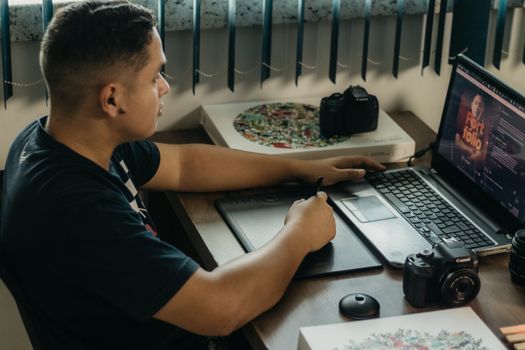 Photo: Kawê Rodrigues / Pexels
 Photo: Felicity Tai / Pexels
 Photo: https://kaboompics.com/ / Pexels