✓ A strong portfolio is your most vital marketing tool.
✓ Quality over quantity is paramount in portfolio curation.
✓ Storytelling through projects elevates your portfolio's impact.
✓ Tailoring your portfolio to specific roles increases success rates.
How It Works
1
Define Your Niche
Understand your strengths and the type of design work you want to attract. This focus will guide your project selection.
2
Curate Your Best Work
Select only your strongest, most relevant projects that demonstrate your skills and potential. Less is often more.
3
Craft Compelling Case Studies
For each project, explain your process, challenges, solutions, and results. Show your thinking, not just the final output.
4
Optimize for Presentation
Choose a clean, professional platform and ensure your portfolio is easy to navigate, visually appealing, and mobile-responsive.
The Foundation: Understanding Your Audience and Purpose for Your Creative Portfolio
Photo: RDNE Stock project / Pexels
Before you even think about selecting projects or designing layouts, the most crucial step in building an exceptional graphic design portfolio is to clearly define its purpose and, more importantly, its intended audience. Without this foundational understanding, your portfolio risks becoming a generic collection of work that fails to resonate with the people you’re trying to impress. Think of your portfolio not just as a display of your past work, but as a strategic marketing tool designed to achieve a specific goal: landing a job, attracting clients, or securing freelance gigs. Who are you trying to reach? Are you aiming for a senior UI/UX role at a tech startup, a branding position at a creative agency, or a freelance illustrator specializing in children's books? Each of these audiences will have different expectations, priorities, and criteria for evaluating your work.
For instance, an agency hiring for branding might prioritize seeing comprehensive brand identity projects, including logo design, style guides, and application examples. A tech company, on the other hand, might be more interested in your user research, wireframing, prototyping skills, and a clear understanding of user-centered design principles. By identifying your target audience, you can then tailor your project selection, the narrative around each project, and even the overall aesthetic of your portfolio to speak directly to their needs and interests. This targeted approach is far more effective than a one-size-fits-all strategy. It shows recruiters and potential clients that you're not only skilled but also thoughtful and strategic in your approach to your career. It demonstrates that you understand their world and can provide solutions relevant to their challenges. This initial strategic phase is often overlooked but is absolutely critical to the success of your graphic design portfolio. It's about being intentional, not just showcasing everything you've ever created. A well-defined purpose and audience will serve as your guiding compass throughout the entire portfolio creation process, ensuring every decision you make contributes to your ultimate goal. Remember, your portfolio isn't for you; it's for them. Understand who 'them' is, and you're already halfway to a winning portfolio. For more insights on showcasing your unique skills, consider exploring resources on personal branding for designers.
Curating Your Masterpiece: Quality Over Quantity in Graphic Design Portfolio Selection
Photo: Greta Hoffman / Pexels
Once you understand your audience and purpose, the next critical step is the meticulous curation of your work. This is where the adage 'quality over quantity' truly shines. It's a common misconception, especially for emerging designers, that a larger portfolio equates to more opportunities. In reality, presenting too many projects, especially those that are mediocre or irrelevant to your target roles, can actively harm your chances. Recruiters and hiring managers are busy; they spend mere seconds, sometimes minutes, scanning a portfolio. They are looking for clear evidence of your best work and your specific capabilities. Overloading them with dozens of projects means they might overlook your strongest pieces, or worse, get bogged down by less impressive ones, leaving them with a negative overall impression.
Your goal should be to present a tightly edited collection of 5-10 *exceptional* projects. Each project should be a shining example of your skills, problem-solving abilities, and creative vision. When selecting projects, ask yourself: Does this project demonstrate a skill relevant to my target role? Is this one of my absolute best pieces of work? Does it tell a compelling story of my design process? If the answer to any of these is 'no,' then it likely doesn't belong in your primary portfolio. Furthermore, consider the diversity of your *best* work. While focusing on a niche is good, showcasing a range of applications within that niche (e.g., for a branding designer: logo, packaging, web elements for different clients) can demonstrate versatility and adaptability. If you have projects that are conceptually strong but perhaps less visually polished, consider refining them or even creating new passion projects that align with your ideal work. These 'spec' projects can be invaluable for filling gaps in your portfolio, especially if you're transitioning careers or don't have extensive client work. The key is ruthless self-editing and an objective eye. If possible, get feedback from trusted mentors or peers to help you identify your strongest pieces. Remember, every piece in your portfolio is a representative of your potential. Make sure each one is doing its job to impress and persuade. This careful selection process is a cornerstone of effective design portfolio strategies and will significantly elevate your professional presentation.
Beyond the Visuals: Crafting Compelling Case Studies for Your Design Projects
Photo: Yuliya Duzhaya / Pexels
A beautiful image is only half the story; the narrative behind it is what truly sells your skills and distinguishes your graphic design portfolio. Simply displaying final designs without context is a missed opportunity. Recruiters aren't just looking at *what* you made, but *why* and *how* you made it. This is where compelling case studies become indispensable. Each project in your portfolio should be presented as a mini-story, detailing your design process from inception to completion. A strong case study typically follows a clear structure:
1. **The Challenge/Problem:** What was the client's problem or the project's objective? What were the constraints or initial requirements? This sets the stage and demonstrates your ability to understand a brief.
2. **Your Role:** Clearly define what your responsibilities were within the project, especially if it was a team effort. This helps potential employers understand your specific contributions.
3. **The Process:** This is the most critical part. Walk the viewer through your thinking. Did you conduct research? Sketch ideas? Create mood boards? Develop wireframes or user flows? Explain your strategic decisions, iterations, and the tools you used. Show, don't just tell. Include process work like sketches, early mockups, and rejected concepts (with explanations for why they were rejected) to illustrate your journey.
4. **The Solution:** Present the final design(s) clearly and professionally. Show them in context (e.g., a logo on a business card, a website on a screen, a poster in a real-world setting).
5. **The Results/Impact:** Whenever possible, quantify the success of your design. Did it increase conversions, improve user engagement, or achieve specific client goals? Even if you don't have hard data, discuss the positive impact or the client's satisfaction. This demonstrates the tangible value of your work.
By providing this level of detail, you're not just showing off pretty pictures; you're showcasing your strategic thinking, problem-solving abilities, communication skills, and understanding of design principles. It proves that you're not just a pixel pusher, but a thoughtful designer who can tackle complex problems and deliver effective solutions. This depth transforms your portfolio into a powerful tool for demonstrating your value and securing opportunities. For further guidance on structuring your project narratives, explore comprehensive portfolio building guides that emphasize storytelling.
Optimizing Presentation: Platforms, Aesthetics, and User Experience for Your Portfolio
The visual presentation and user experience of your graphic design portfolio are just as important as the work itself. Think of your portfolio platform as a canvas that frames your art; a poorly chosen or executed frame can detract from even the most stunning masterpiece. When it comes to platforms, you have several choices, each with its own advantages. Dedicated portfolio platforms like Behance and Dribbble are excellent for exposure within the design community and can serve as a secondary presence, but a personal website often provides the most control and professionalism. Platforms like Squarespace, Webflow, or Adobe Portfolio offer user-friendly ways to build a custom site without extensive coding knowledge. The key is to choose a platform that allows you to showcase your work cleanly, responsively, and reflect your personal brand.
Regardless of the platform, prioritize a clean, minimalist aesthetic. Let your work be the star. Avoid overly elaborate or distracting website designs that compete with your projects. Ensure easy navigation, with a clear menu and intuitive project organization. Your portfolio should be mobile-responsive, as many recruiters will view it on various devices. High-quality imagery is non-negotiable; use professional mockups and high-resolution images that load quickly. Pay attention to typography, color palette, and spacing – these elements subtly communicate your design sensibilities. Finally, include a professional 'About Me' page with a clear headshot, a concise bio, and your contact information. A well-designed portfolio is a testament to your skills before anyone even looks at a single project. It shows you understand the importance of user experience and attention to detail – qualities every employer values.
**Key Presentation Tips:**
* **Choose the Right Platform:** Personal website (Squarespace, Webflow, Adobe Portfolio) for control, or curated platforms (Behance, Dribbble) for community exposure.
* **Keep it Clean & Minimalist:** Let your designs shine without visual clutter.
* **Prioritize User Experience (UX):** Easy navigation, clear project hierarchy, fast loading times.
* **Ensure Responsiveness:** Your portfolio must look good and function well on all devices.
* **High-Quality Visuals:** Use professional mockups, consistent branding, and high-resolution images.
* **Professional 'About Me' Page:** Include a photo, concise bio, and clear contact details.
* **Proofread Meticulously:** Typos undermine credibility. Get a second pair of eyes to review all text.
* **Seek Feedback:** Ask peers or mentors for honest critiques on your portfolio's presentation and UX.
Comparison
Feature
Best Option (Personal Website)
Alternative 1 (Behance/Dribbble)
Alternative 2 (PDF Portfolio)
Control & Customization
High
Limited
High
Professionalism
Very High
Moderate
Moderate
SEO Potential
High
Low
None
Analytics & Tracking
Available
Basic
None
Ease of Update
Moderate
Easy
Hard
Interactive Elements
✓
✗
✗
Direct Client Link
✓
✓
✓
What Readers Say
★★★★★
"Following these graphic design portfolio tips transformed my online presence. I went from getting ignored to receiving multiple interview requests in just weeks. The advice on case studies was a game-changer!"
Sarah J. · Austin, TX
★★★★★
"The focus on quality over quantity really resonated with me. I ruthlessly cut down my portfolio to my top 7 projects, and the feedback from recruiters has been overwhelmingly positive. Highly recommend these strategies."
Mark D. · New York, NY
★★★★★
"After implementing the storytelling tips for my projects, I landed my dream job as a Senior Brand Designer. The hiring manager specifically praised how well I articulated my process and the impact of my work."
Emily R. · Los Angeles, CA
★★★★★
"While most tips were incredibly helpful, I found the section on platform choice a bit overwhelming initially. However, the subsequent advice on presentation clarity made it much easier to decide. Good, practical advice overall."
David L. · Chicago, IL
★★★★★
"As a freelance designer, I needed to attract higher-paying clients. These graphic design portfolio tips helped me refine my niche and create a portfolio that speaks directly to my ideal clients. My rates have increased significantly!"
Jessica M. · Miami, FL
Frequently Asked Questions
What is the most important aspect of a graphic design portfolio?
The most important aspect is demonstrating your problem-solving ability through compelling case studies, not just displaying pretty pictures. Recruiters want to see your thought process, how you approach challenges, and the impact of your design solutions. Quality, relevance, and narrative are paramount over sheer volume of work.
How many projects should I include in my graphic design portfolio?
Aim for 5-10 of your absolute strongest and most relevant projects. Quality significantly outweighs quantity. A smaller, highly curated selection allows you to showcase your best work in depth, ensuring recruiters see your potential without getting overwhelmed by less impressive pieces.
How do I create a portfolio if I don't have much professional experience?
Focus on creating 'spec' or passion projects that align with the type of work you want to do. Identify a fictional client or a real-world problem, then design a comprehensive solution. Participate in design challenges, volunteer for non-profits, or redesign existing brands. These projects demonstrate your skills and initiative just as effectively as paid client work.
What's the ideal platform for a graphic design portfolio, and how much does it cost?
A personal website (e.g., via Squarespace, Webflow, Adobe Portfolio) offers the most control and professionalism, typically costing $10-$30/month. Free platforms like Behance and Dribbble are great for exposure but offer less customization. Investing in a professional platform is a small cost for a significant career asset.
How does a digital portfolio compare to a physical one?
In today's digital age, a robust online portfolio is almost always preferred for its accessibility, shareability, and ability to include interactive elements and detailed case studies. A physical portfolio might be used for in-person interviews or niche art fields, but for most graphic design roles, digital is king. Ensure your digital portfolio is mobile-responsive.
Who should use graphic design portfolio tips?
Anyone looking to advance their career in graphic design should utilize these tips. This includes students seeking their first internship, recent graduates applying for entry-level positions, experienced designers looking for a career change or promotion, and freelancers aiming to attract higher-paying clients. A strong portfolio is universal to success in design.
Is it risky to show personal or experimental projects in my portfolio?
It's not risky, but strategic. Personal or experimental projects can showcase your unique voice, creativity, and willingness to explore beyond client briefs. However, ensure they are still polished, well-presented, and relevant to the kind of work you want to attract. Mix them with client projects to show both your professional capabilities and your individual artistic flair.
What are the future trends for graphic design portfolios?
Future trends emphasize interactivity, personalized experiences, and dynamic content. Expect to see more portfolios incorporating motion graphics, 3D elements, augmented reality (AR) concepts, and even AI-generated design explorations. Storytelling will remain crucial, with an increasing focus on measurable impact and user-centered design processes.
Ready to transform your career? Apply these graphic design portfolio tips today to craft a compelling showcase of your talent and open doors to incredible opportunities. Your dream job is waiting for a portfolio that truly stands out.

 Photo: RDNE Stock project / Pexels
 Photo: Greta Hoffman / Pexels
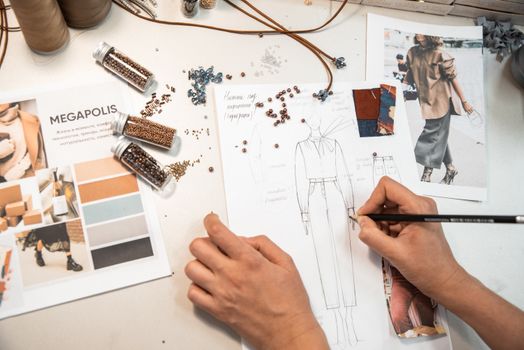 Photo: Yuliya Duzhaya / Pexels