Master Your Craft: The Essential Digital Portfolio for Artists

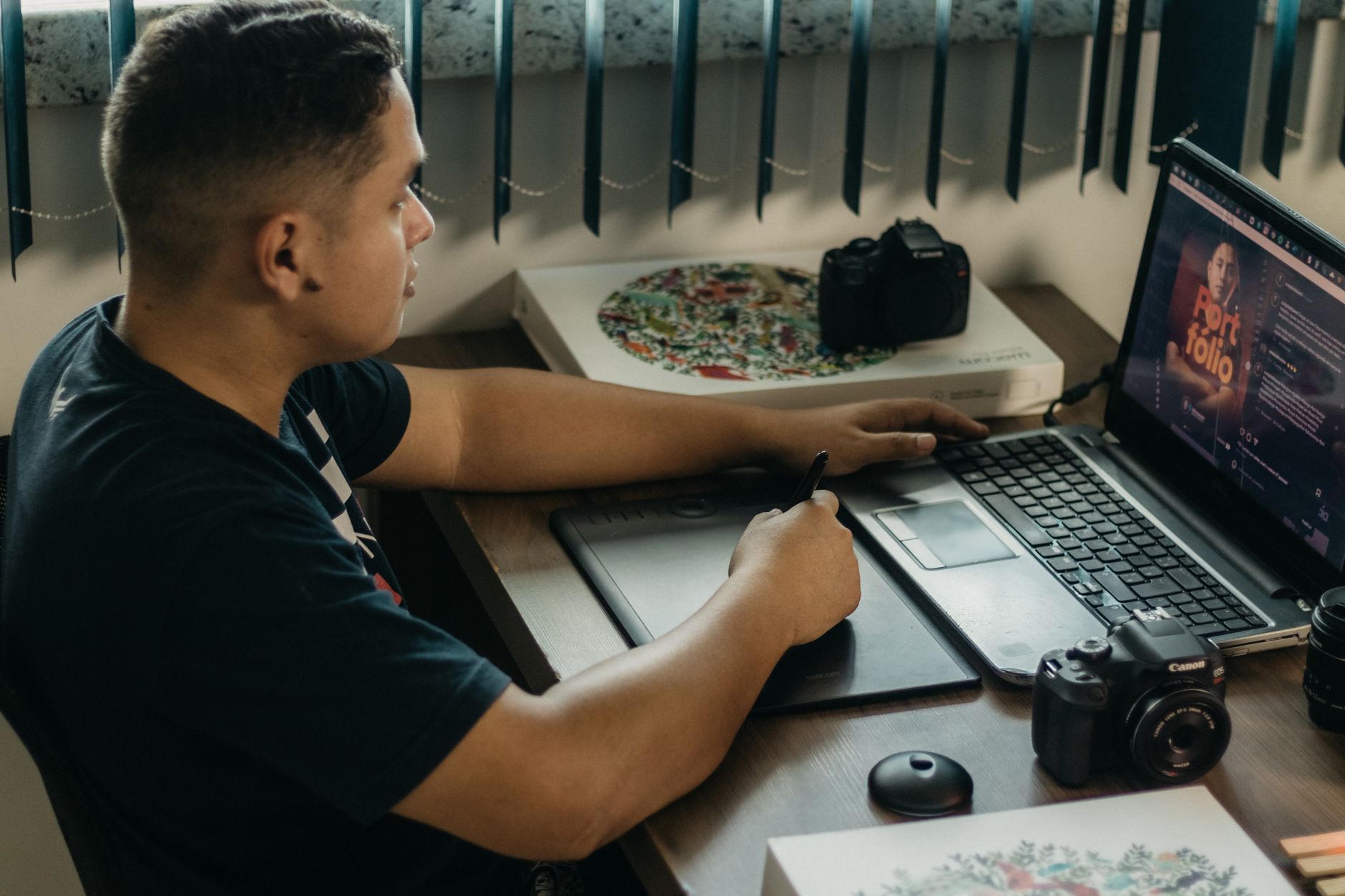
Man editing photos on a laptop using a graphics tablet, set in an indoor workspace with camera equipment.Photo: Kawê Rodrigues / Pexels

Master Your Craft: The Essential Digital Portfolio for Artists

Build an impactful online presence that captivates viewers and propels your artistic career forward.

Start Building Your Portfolio

Key Takeaways

  • ✓ A digital portfolio is crucial for artists to reach a global audience.
  • ✓ It acts as your professional storefront, accessible 24/7.
  • ✓ Curating your best work is more important than including everything.
  • ✓ Regular updates keep your portfolio fresh and relevant.

How It Works

1
Define Your Artistic Niche

Identify your unique style and target audience. This clarity will guide your portfolio's content and design choices, ensuring it resonates with potential clients or galleries.

2
Curate Your Masterpieces

Select only your strongest, most representative pieces. Quality over quantity is paramount to making a powerful first impression and showcasing your artistic voice effectively.

3
Choose the Right Platform

Research and select a platform that aligns with your needs and technical comfort. Options range from dedicated portfolio sites to custom-built websites, each offering different levels of control and features.

4
Optimize and Promote Your Portfolio

Ensure your images are high-resolution but web-friendly, and include compelling descriptions. Share your portfolio across social media, email, and networking events to maximize its reach.

Why Every Artist Needs a Compelling Online Art Portfolio in Today's World

In an increasingly digital landscape, the concept of an artist's portfolio has evolved dramatically. Gone are the days when a physical binder of prints was sufficient to showcase one's talent. Today, a robust and thoughtfully constructed digital portfolio for artists is not just an advantage; it's an absolute necessity. It serves as your primary professional identity, a dynamic exhibition space that is open 24/7 to a global audience. Imagine the reach: potential clients in another state, galleries across continents, or even art directors seeking new talent for a project – all can discover your work with a few clicks. Without a digital presence, you're essentially operating in a vacuum, limiting your exposure and opportunities drastically. Beyond mere visibility, a digital portfolio offers unparalleled control over your narrative. You dictate how your art is presented, the accompanying context, and the story behind each piece. This level of curation is vital for shaping perceptions and communicating your artistic vision effectively. It allows you to present a cohesive body of work, demonstrating your versatility, technical skill, and unique aesthetic. Furthermore, it's a living document that can be updated instantly, reflecting your latest creations, awards, or exhibitions. This agility is something a static physical portfolio simply cannot match. Consider the practical benefits as well: no more lugging heavy binders, no risk of damage or loss, and the ability to share your entire oeuvre with anyone, anywhere, at any time. It democratizes the art world, allowing emerging artists to compete on a more level playing field with established names, provided they present their work professionally. It's an investment in your career that pays dividends in visibility, credibility, and ultimately, opportunities. The digital realm is where conversations about art are happening, where connections are forged, and where careers are launched. To ignore this vital tool is to intentionally limit your potential in a competitive and evolving market. Understanding the fundamental role of a digital portfolio is the first step towards leveraging its power for your artistic journey.

Crafting Your Narrative: Selecting and Presenting Your Best Artwork

The cornerstone of an effective digital portfolio for artists lies in the careful selection and presentation of your work. This isn't just a collection of everything you've ever made; it's a curated exhibition designed to tell a story about who you are as an artist and what you're capable of. The principle of 'quality over quantity' cannot be overstated here. Potential clients or curators often spend mere seconds scanning a portfolio, and those initial moments are critical. Including weaker pieces dilutes the impact of your strongest work and can raise doubts about your overall skill level. Instead, aim to showcase a cohesive body of work that highlights your expertise, unique style, and preferred medium. If you work in multiple styles, consider creating separate, focused portfolios for each, or clearly categorize them within a single site. Think critically about the narrative you want to convey. What message do you want your portfolio to send? Are you a portrait artist, an abstract painter, a sculptor, or a digital illustrator? Your selection should reinforce this identity. Include a diverse range of pieces that demonstrate your technical proficiency, creative problem-solving, and thematic depth. For each piece, high-quality photography is paramount. Blurry, poorly lit, or oddly cropped images can severely detract from even the most brilliant artwork. Invest in good lighting, a decent camera, or professional photography services if necessary. The digital representation of your art is often the first, and sometimes only, way people will experience it. Beyond the visuals, compelling descriptions are essential. Each piece should have a concise title, medium, dimensions (if applicable), and year of creation. More importantly, consider adding a brief artist statement or anecdote for each piece. What inspired it? What techniques did you employ? What emotions or ideas does it explore? These details add depth, context, and a personal touch, allowing viewers to connect more deeply with your work. Remember, your portfolio isn't just about showing what you've done; it's about showcasing your potential and inviting viewers into your artistic world. A well-curated and beautifully presented portfolio acts as a powerful ambassador for your talent.

Choosing the Right Platform: Website Builders vs. Dedicated Portfolio Sites

Once you've meticulously curated your artwork, the next critical step for your digital portfolio for artists is choosing the right platform to host it. This decision can significantly impact your portfolio's functionality, aesthetics, and ease of management. Broadly, your options fall into two main categories: dedicated portfolio platforms and general website builders. Each has its own set of advantages and disadvantages, and the 'best' choice often depends on your technical comfort, budget, and specific career goals. Dedicated portfolio platforms like ArtStation, Behance, Dribbble (primarily for designers), or even specialized artist website builders like Pixpa or Format, are designed with artists in mind. They often come with pre-built templates optimized for showcasing visual work, features like robust image galleries, integrated e-commerce options, and sometimes even built-in community features. These platforms tend to be more intuitive for artists who prefer to focus on their art rather than complex web development. They usually handle hosting, security, and updates, simplifying the technical overhead. The downside can be less design flexibility, potential subscription costs, and sometimes a 'templated' look that might not fully differentiate you. However, for many artists, the ease of use and art-specific features make them an excellent choice for quickly establishing a professional online presence. On the other hand, general website builders such as Squarespace, Wix, or WordPress (with appropriate themes and plugins) offer much greater flexibility and control. With these platforms, you can truly customize every aspect of your site's design, branding, and functionality. This allows for a unique and highly personalized digital space that can evolve with your career. You can integrate blogs, advanced e-commerce solutions, booking systems, and tailor the user experience precisely to your vision. The trade-off is often a steeper learning curve and potentially higher maintenance. While these platforms are user-friendly, achieving a truly bespoke design might require more time, effort, or even hiring a web designer. However, for artists who want complete ownership over their online brand and desire advanced features beyond simple image display, a versatile website builder offers unparalleled creative freedom. Weigh your technical skills, time commitment, and budget against the level of customization and specialized features each option provides to make an informed decision that best serves your artistic career.

Optimizing Your Digital Portfolio for Maximum Impact and Reach

Building your digital portfolio for artists is only half the battle; optimizing and promoting it are crucial for ensuring it reaches the right eyes and makes the desired impact. Without proper optimization, even the most stunning portfolio can get lost in the vastness of the internet. Here are key strategies to maximize your portfolio's effectiveness: * **High-Quality, Optimized Images:** While high resolution is essential, large file sizes can slow down your site, leading to frustrated visitors. Use image compression tools (like TinyPNG or ShortPixel) to reduce file sizes without sacrificing visual quality. Ensure images are consistently sized and formatted for a professional look. * **Clear and Concise Descriptions:** Each artwork needs a title, medium, dimensions, and year. Beyond that, a brief, engaging artist statement or story for each piece adds context and allows viewers to connect on a deeper level. Avoid jargon and keep it accessible. * **Search Engine Optimization (SEO) Basics:** * **Keyword Integration:** Use relevant keywords in your page titles, image alt text, and descriptions. Think about what potential clients or galleries might search for (e.g., 'abstract oil painter NYC', 'commissioned pet portraits'). * **Alt Text:** Describe your images for visually impaired users and search engines. This is a missed opportunity for many artists. * **Mobile Responsiveness:** Ensure your portfolio looks and functions perfectly on all devices – phones, tablets, and desktops. Google prioritizes mobile-friendly sites. * **Fast Loading Speed:** Optimize images and choose a reliable hosting provider to ensure quick load times. Visitors won't wait for slow sites. * **Contact Information and Call to Action:** Make it incredibly easy for people to contact you for commissions, collaborations, or inquiries. Include a clear contact form, email address, and links to your social media. Suggest next steps, like 'Inquire about a commission' or 'View my full gallery.' * **Artist Statement and Bio:** A compelling artist statement articulates your vision, philosophy, and influences. Your bio should be professional, highlighting your education, exhibitions, and achievements. These provide crucial context for your work. * **Social Media Integration:** Link your portfolio prominently on all your social media profiles. Regularly share new work from your portfolio across platforms, driving traffic back to your main site. Engage with your audience and participate in relevant art communities. * **Email List Building:** Offer a way for visitors to sign up for your newsletter. This is a direct line to interested individuals for updates on new work, shows, or sales. * **Networking and Cross-Promotion:** Share your portfolio link when applying for opportunities, collaborating with other artists, or participating in online groups. The more legitimate places your link appears, the better for discovery. By diligently applying these optimization techniques, your digital portfolio will not only look professional but also work harder for you, attracting a wider audience and converting interest into tangible opportunities.

Comparison

FeatureSquarespace (Website Builder)ArtStation (Dedicated Portfolio)WordPress (Self-Hosted)
Ease of UseVery HighHighModerate (requires learning)
Design FlexibilityHigh (template-based)Moderate (pre-defined layouts)Very High (via themes/plugins)
Cost (monthly avg.)$16-$26Free (basic) / $7-$10 (Pro)$5-$30 (hosting) + themes/plugins
SEO ControlGood built-in toolsLimited (platform-dependent)Excellent (via plugins)
E-commerce Integration✓ (Built-in)✓ (Pro features)✓ (Via WooCommerce)
Community Features✓ (Strong)✗ (via plugins)
Technical MaintenanceManaged by platformManaged by platformYour responsibility

What Our Readers Say

5 ★★★★★

"Creating my digital portfolio for artists on Squarespace was a game-changer. I used to rely on Instagram, but having my own site made me look so much more professional and resulted in two new commissions within a month."

5 ★★★★★

"ArtStation has been incredible for showcasing my concept art. The platform's focus on professional art means my work is seen by the right people, leading to valuable industry connections."

5 ★★★★★

"After struggling with a clunky old site, I rebuilt my digital portfolio for artists with a clear focus on user experience. My website traffic increased by 40%, and I've received more gallery inquiries than ever before."

4 ★★★★☆

"While building my own WordPress site took a bit more effort, the complete control over design and SEO for my digital portfolio for artists has been worth it. I just wish there were more art-specific themes out of the box."

5 ★★★★★

"As a fine artist, I needed a clean, elegant way to present my oil paintings. My digital portfolio allows me to tell the story behind each piece, which resonates deeply with collectors."

Frequently Asked Questions

What is the absolute minimum I need for a digital portfolio for artists?
At minimum, you need 10-20 of your strongest, high-resolution pieces, clear titles and descriptions, an artist statement/bio, and readily accessible contact information. Choose a platform that makes it easy to present these elements professionally, even if it's a free option initially.
I'm not tech-savvy; can I still build a professional digital portfolio?
Absolutely! Platforms like Squarespace, Wix, or even dedicated artist sites like Pixpa are designed with user-friendliness in mind, offering drag-and-drop interfaces and pre-designed templates that require no coding knowledge. Focus on your content, and the platform will handle the technical aspects.
How often should I update my digital portfolio?
You should update your digital portfolio whenever you complete significant new work, receive an award, have an exhibition, or feel your style has evolved. Aim for at least quarterly updates to keep it fresh and demonstrate ongoing artistic activity, but don't feel pressured to add just for the sake of it – quality always trumps quantity.
Is it worth paying for a premium portfolio platform or website builder?
For most professional artists, yes. While free options exist, premium platforms often offer custom domain names, more storage, better SEO tools, integrated e-commerce, and professional customer support. These features enhance your credibility, reach, and ability to monetize your art, making the investment worthwhile for career growth.
Should I use social media as my primary digital portfolio?
While social media is excellent for discovery and engagement, it shouldn't be your primary digital portfolio. Social platforms have algorithmic limitations, lack customization, and you don't own the content or the audience. Use social media to drive traffic to your dedicated portfolio website, which you control completely.
Who benefits most from having a robust digital portfolio for artists?
Anyone looking to build a professional art career benefits immensely. This includes fine artists, illustrators, concept artists, photographers, graphic designers, sculptors, and animators. It's essential for attracting clients, securing gallery representation, applying for grants or residencies, and building a strong personal brand.
Are there security risks with hosting my art online?
Reputable portfolio platforms and website builders have security measures in place. The main concern for artists is often copyright infringement. While no method is foolproof, you can add watermarks, include clear copyright notices, and use image compression to deter high-resolution theft. Choose platforms with good security practices and always back up your original files.
What are the future trends for digital portfolios for artists?
Future trends include more interactive and immersive experiences (e.g., 3D art, AR/VR integration), personalized AI-driven portfolio curation, deeper integration with NFTs and blockchain for provenance, and enhanced analytics to understand viewer engagement. Mobile-first design and accessibility will also continue to be paramount.

Elevate your artistic journey by creating a powerful digital portfolio for artists today. It's more than just a collection of images; it's your professional storefront, your voice, and your gateway to new opportunities. Start building your legacy and connecting with the world through your art.

Topics: digital portfolio for artistsonline art portfolioartist website buildershowcase artwork onlineart career growth
Leo List
Brampton weed
Adultwork